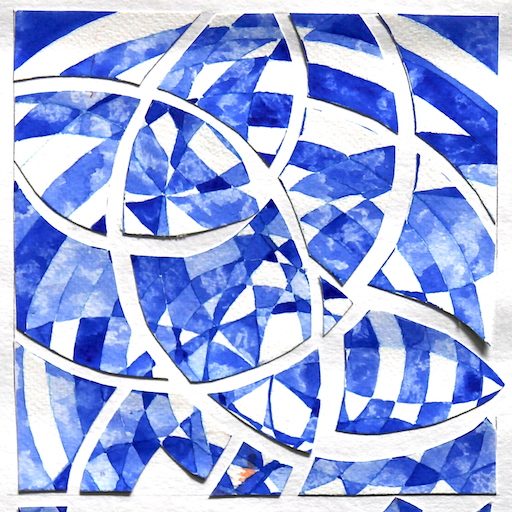
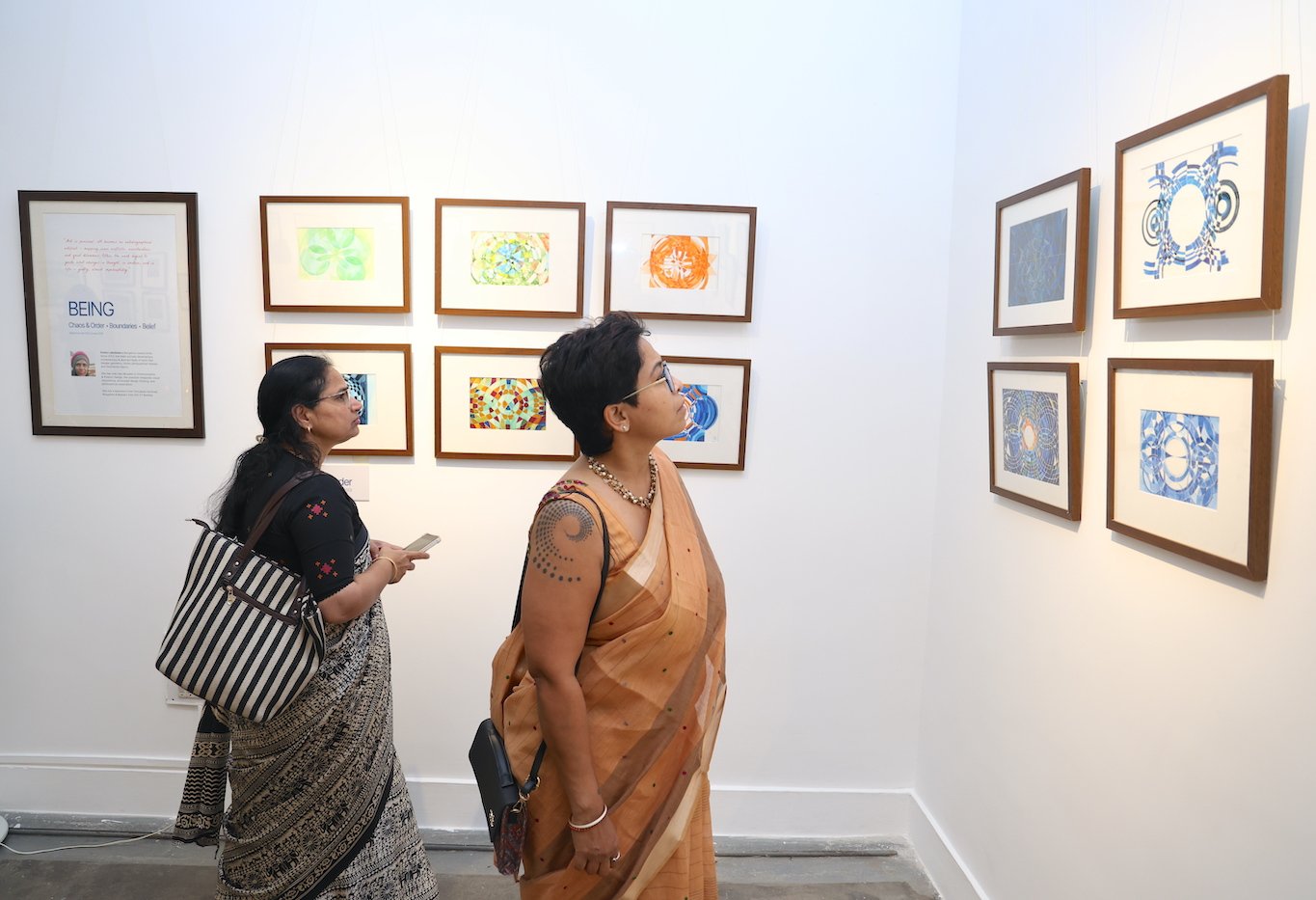
I believe abstract art is a beautiful way to express what words often can’t. It allows us to explore emotions, thoughts, and ideas that go beyond the surface, diving into something deeper and more meaningful. For me, abstract art isn’t just about shapes, colors, or patterns—it’s about creating a space for reflection, connection, and discovery.
When I create or experience abstract art, I see it as a journey. It’s like stepping into a world where there are no fixed answers, only possibilities. This openness is what makes it so powerful. Abstract art gives both the artist and the viewer the freedom to interpret, feel, and connect in their own unique ways. It doesn’t dictate a story but invites you to create one for yourself.
What I find especially exciting is how abstract art can bridge the past and the present. My work often brings together traditional Indian motifs with contemporary styles, and I think abstraction is a great way to explore this mix. It lets me take ideas rooted in Indian philosophy and spirituality and express them in a way that is fresh and relevant today. For example, I love exploring themes like the connection between the self and the collective. Abstract forms help me show how individuals interact with larger systems or groups, and how these relationships are always shifting and evolving.
I appreciate that abstract art taps into intuition. You don’t need to explain or understand it fully to feel its impact. It invites you to engage on an emotional level, which can be very powerful. It’s like a conversation where the meanings keep unfolding over time.
As someone who also works in design and education, I see abstract art as a way to spark creativity. It challenges the way we think, helping us break away from rigid patterns and explore new ideas. In this way, abstract art isn’t just about making something beautiful—it’s also about innovation and problem-solving. It teaches us to see the world differently, a lesson I often carry into my work in design.
I find that abstract art has an inclusive quality. It doesn’t belong to one culture or one story. Instead, it bridges and creates a universal space where each one of us can find our own meaning. That’s especially important to me because I want my work to invite people from different backgrounds to connect with it in their own way.
Ultimately, abstract art, for me, is about freedom. It’s about breaking down boundaries—between past and present, between the personal and the universal, and even between artist and viewer. It’s a way to express who I am and what I feel, while also opening a door for others to do the same. It’s deeply personal yet endlessly shared, and that’s what makes it so special.
As a homework, 😉 Why not start asking your own questions on an abstract artwork, allow yourself to meander through your answers? Let me know the artwork name, artist’s name & how that conversation panned out.
Leave a Reply