
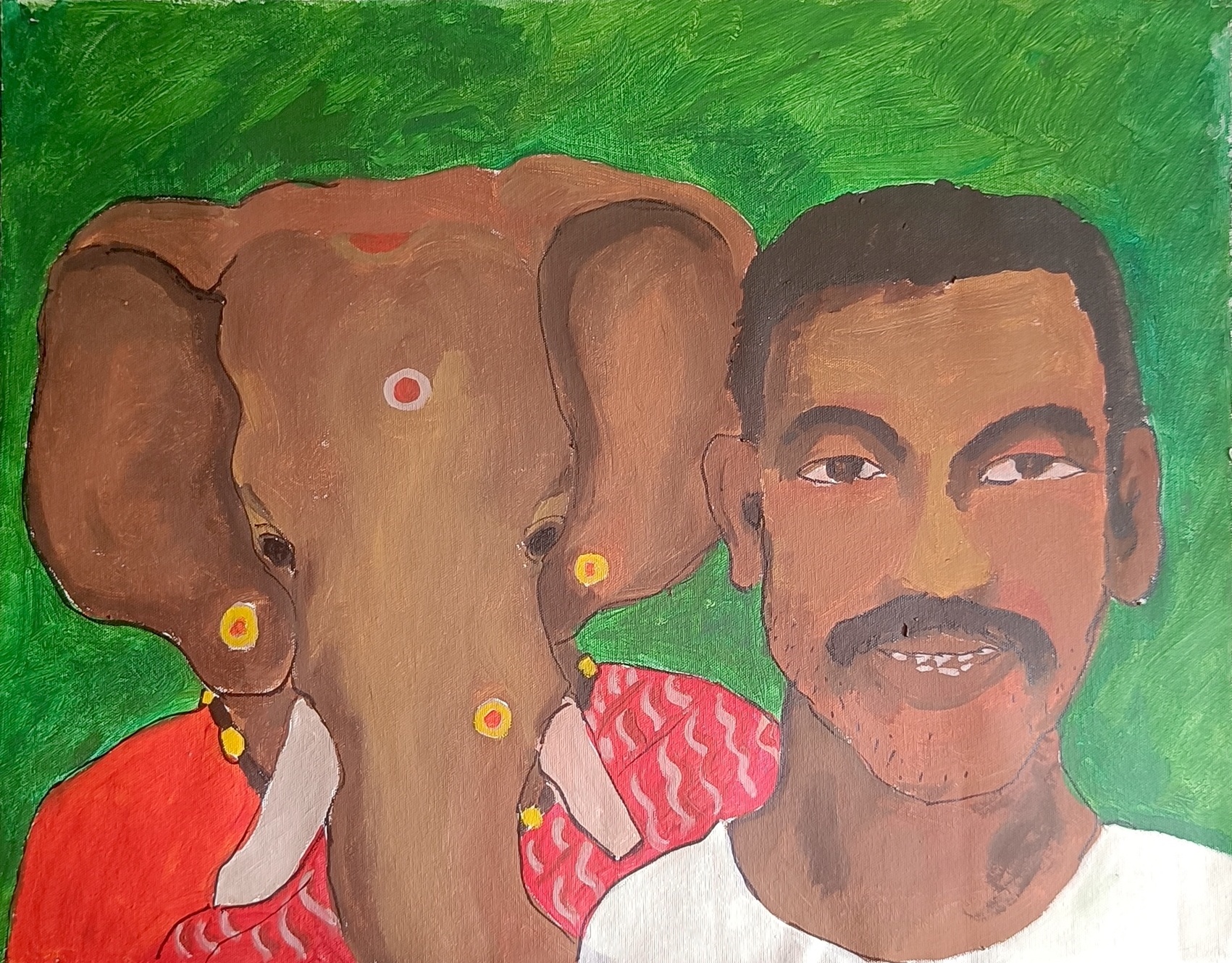
A series of portraits that subtly examines gender roles within domestic environments.

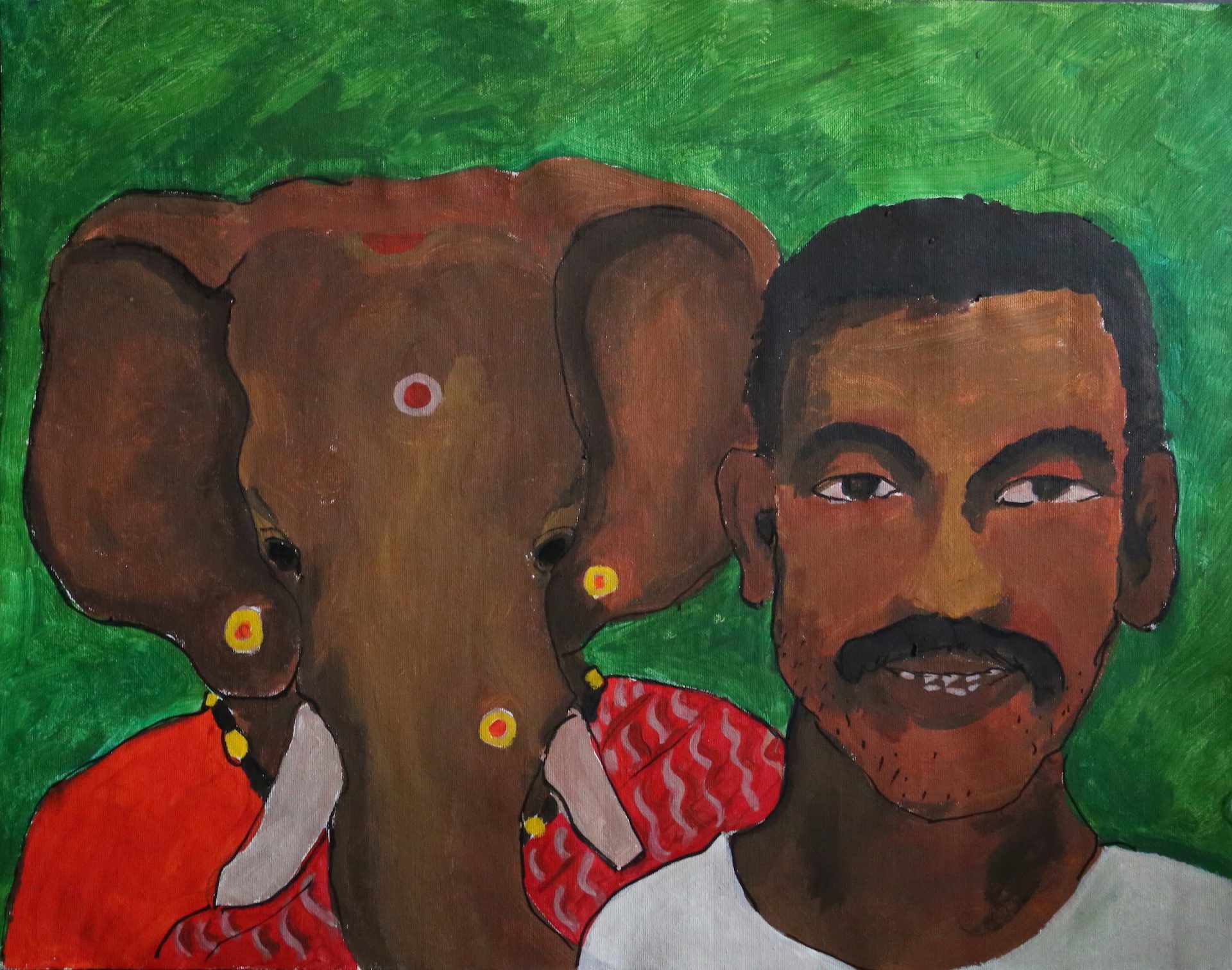
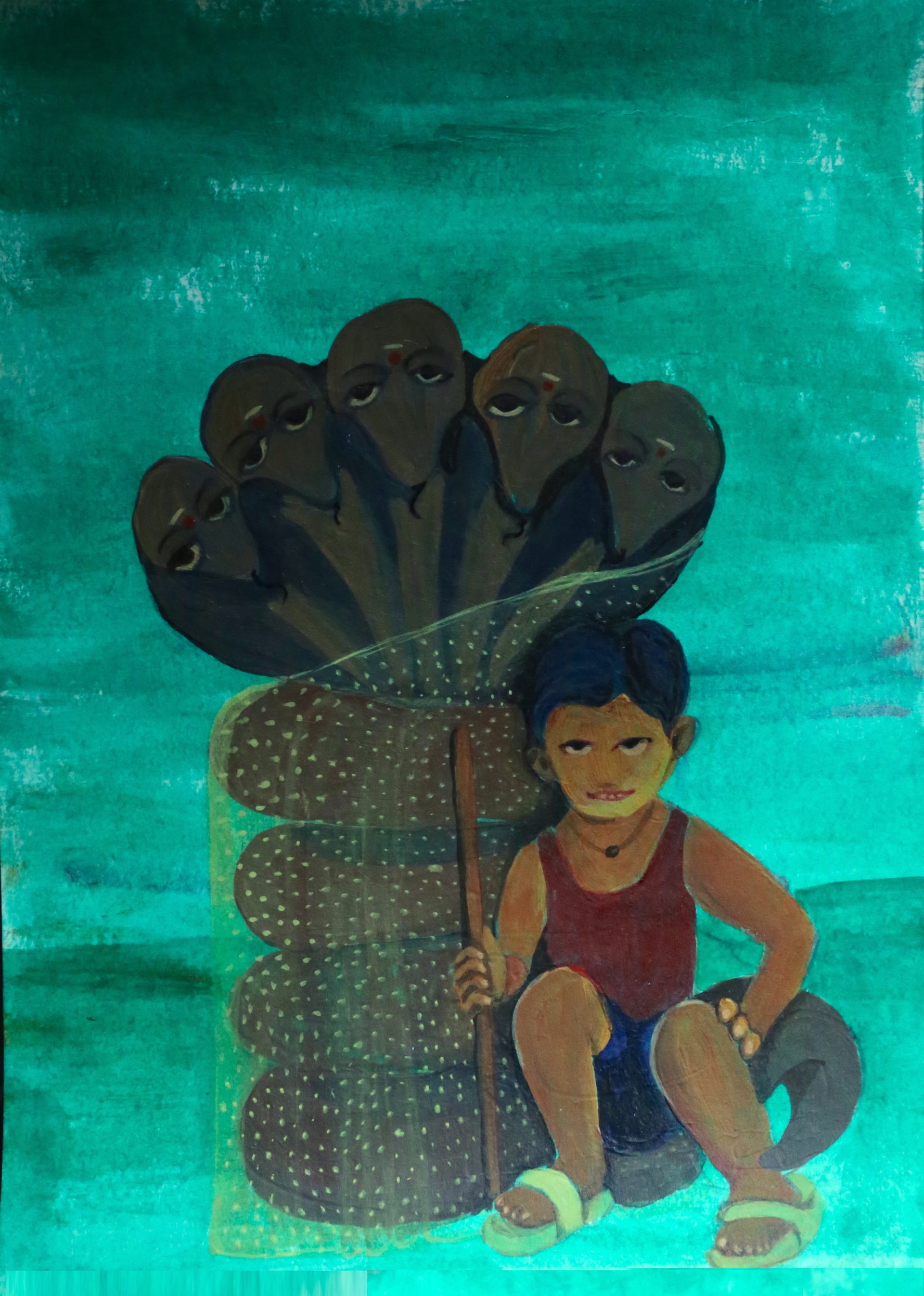
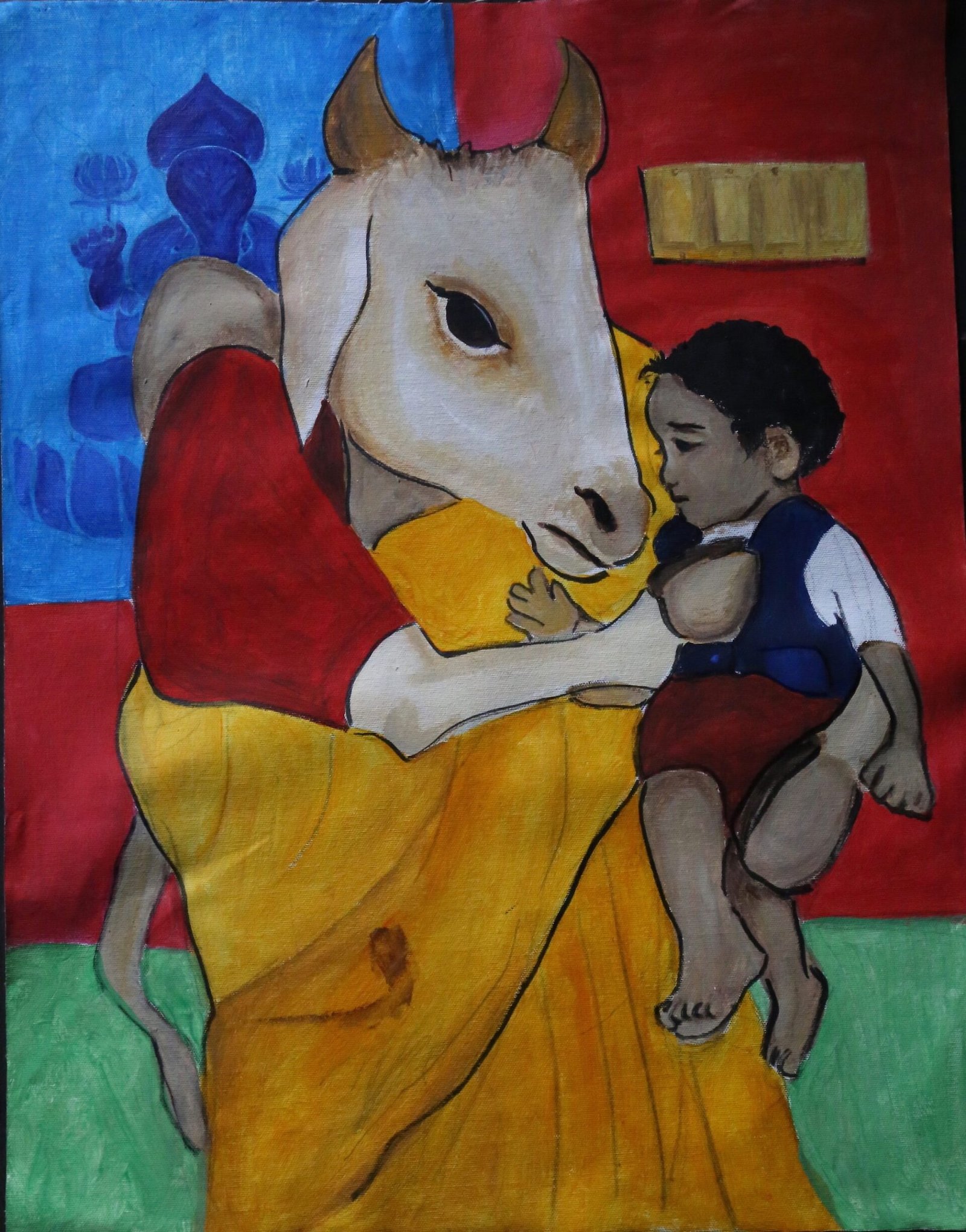
Each portrait explores the theme of women in close relationships being visible yet voiceless, depicted as animals or beasts of burden. These representations highlight how traditionally women are often reduced to their utilitarian roles, seen as tools for labor rather than valued as individuals with their own thoughts, perspectives, and autonomy. The surrounding calm and collected scenes starkly contrast with the assertive presence of others, emphasizing the quiet subjugation of these women, whose humanity is overshadowed by the demands placed upon them.
Me Husband
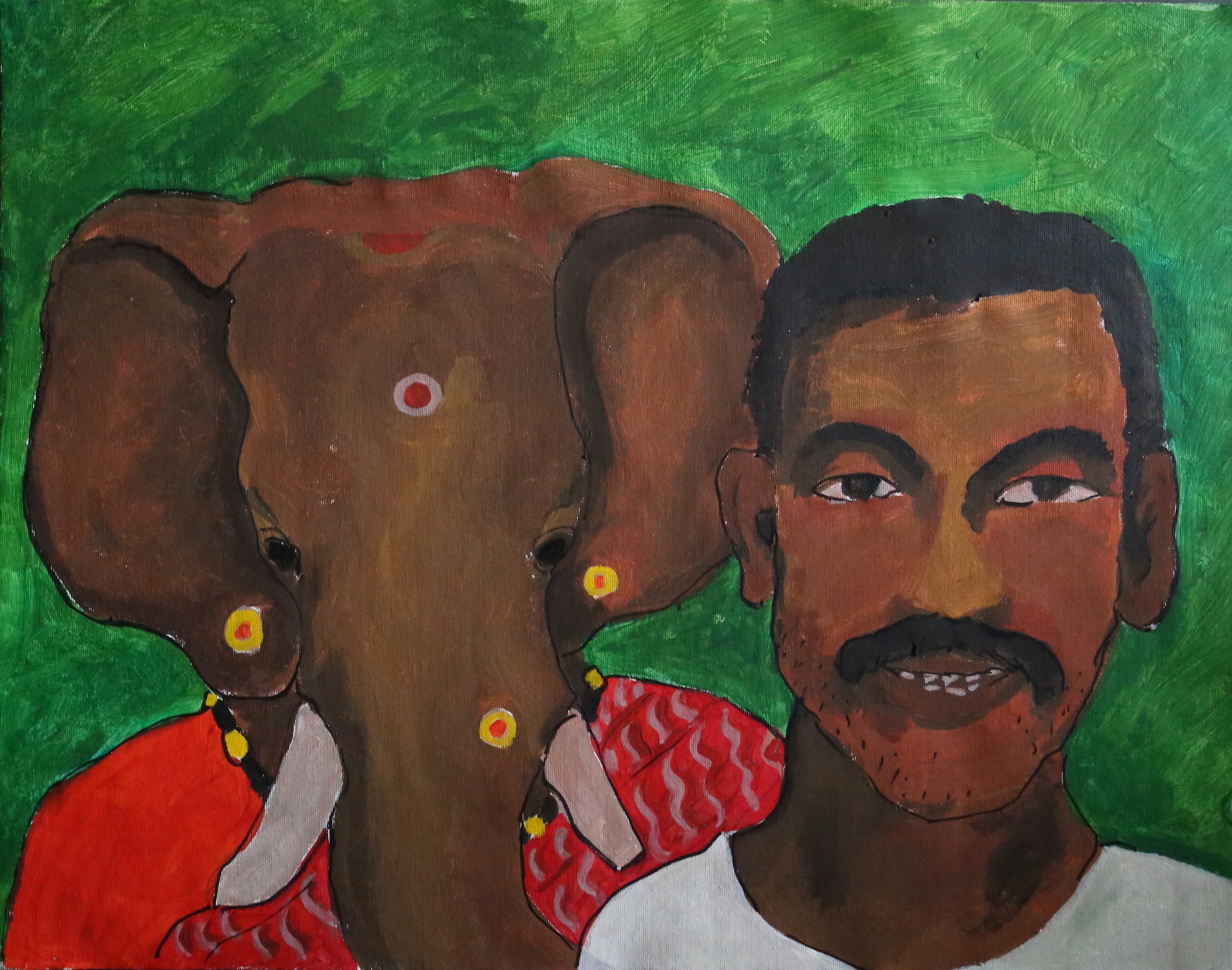
Oct 2017, 18″ x 23″
Acrylic on Canvas
In this piece, the majestic She-Ganesha stands beside her farmer husband, subtly yet powerfully embodying traditional gender dynamics. Her divine presence and inherent strength are evident, yet deliberately understated, reflecting a societal expectation that a woman’s power must remain subdued unless it serves a utilitarian purpose. The composition critiques the cultural norms that confine a woman’s value to her usefulness, rendering her true power and presence both visible and suppressed.
Me Son
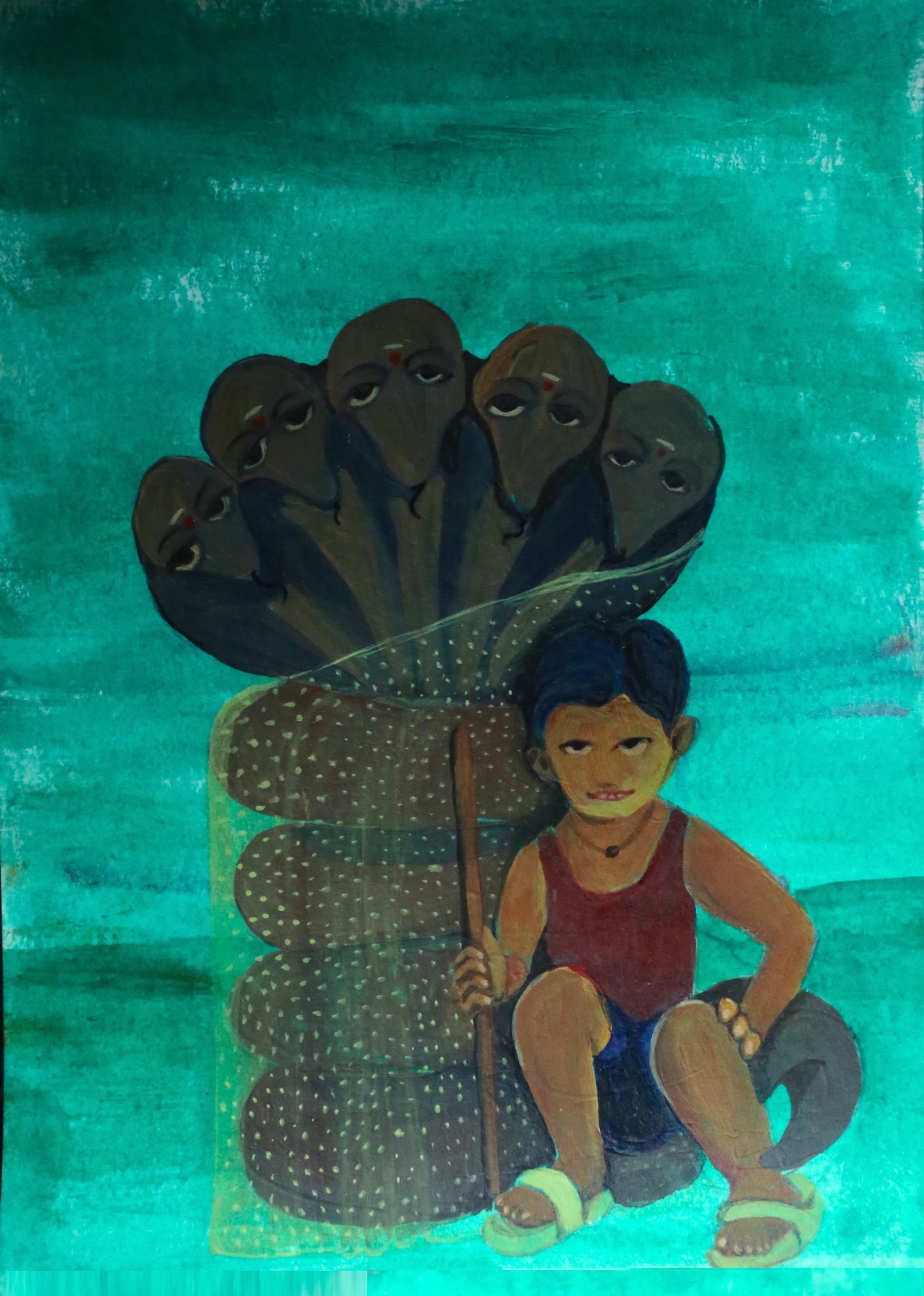
Oct 2017, 8″ x 11″
Acrylic on Paper
A large, hooded Kalinga, a powerful and venomous snake, is delicately draped in a sheer saree. The Sarpa’s poised and graceful demeanor starkly contrasts with the intense expression of her 4-year-old guardian, a child who, despite his tender age, takes on the role of protector. This piece contrasts vulnerability and power, revealing how the woman’s true strength is hidden beneath the veneer of traditional femininity. The young boy’s attempt to shield his mighty mother, who has perhaps forgotten her own power, reflects the generational transmission of beliefs that embed themselves deeply in both societal norms and individual identities.
Me Grandson
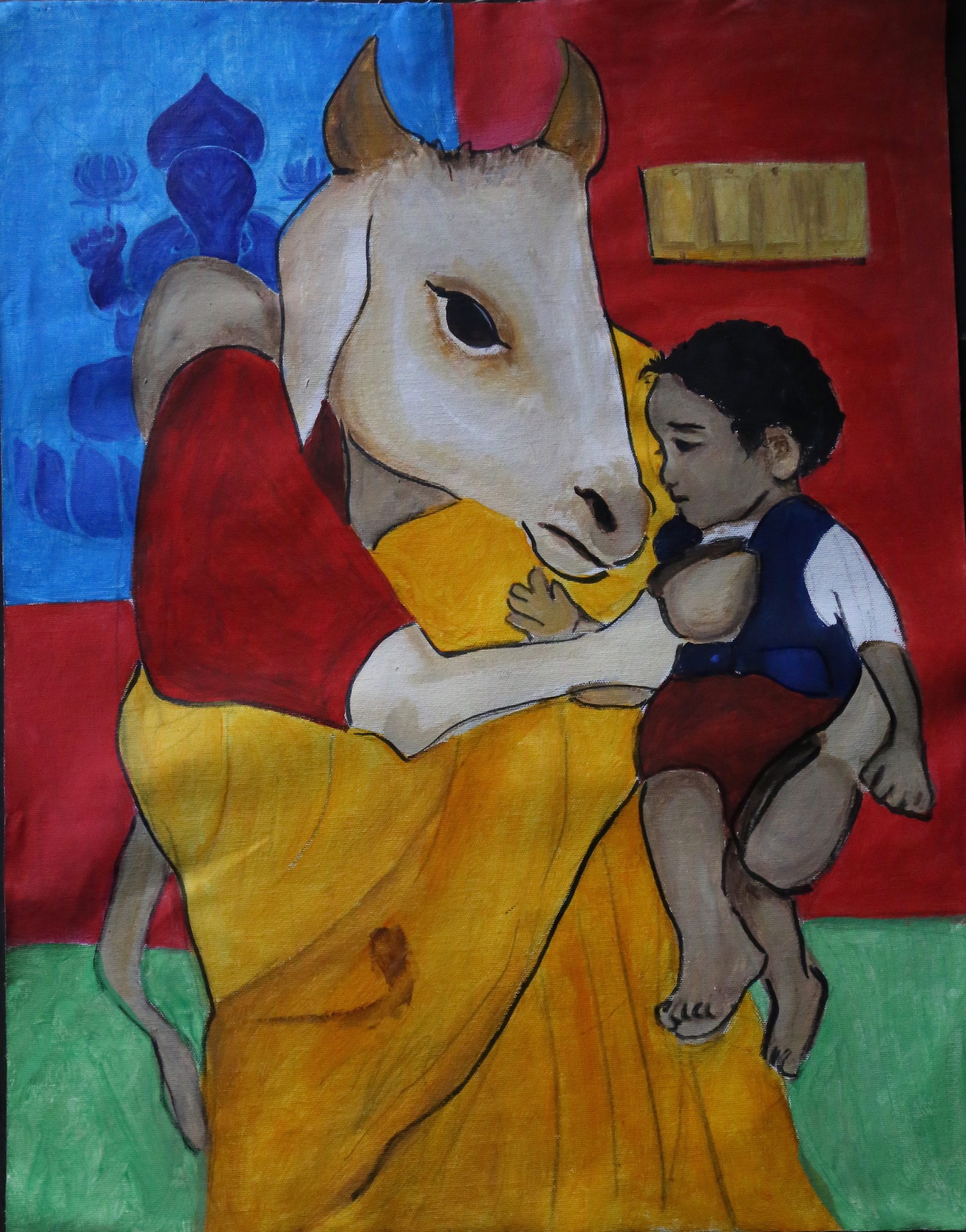
Oct 2017, 18″ x 23″
Acrylic on Paper
This portrait features a gentle Kamadhenu, embodying the nurturing essence of a grandmother as she carries her 3-year-old grandson. The cow’s calm and maternal presence symbolizes wisdom and care, while the act of carrying the child highlights the traditional burdens and responsibilities placed on women. The serene connection between the cow and the child reflects the deep cultural values of familial care and heritage; a labor often shouldered by Indian grandmothers as they guide the next generations. The child, though confused by the grandmother’s form, accepts her identity as she does herself.